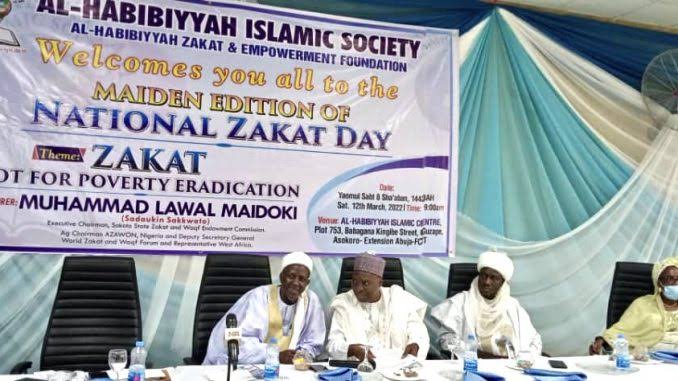


The Al-Habibiyyah Islamic Society has distributed N30 million worth of sewing machines, grinding machines, freezers, and cash for business start-ups to 140 recipients in Abuja.
Notably, the beneficiaries include both Christian and Muslim faithful, receiving support through the Islamic principle of Zakat.
This is in a significant step towards poverty eradication.
This initiative, held in commemoration of the 5th National Zakat and Waqf Day over the weekend, aims to bridge inequality gaps and alleviate poverty within society.
The chief executive and imam of the Al-Habibiyyah Islamic Society, Imam Fuad Adeyemi, explained that Zakat disbursement not only serves as a means of poverty alleviation and wealth purification but also supplements government efforts and aids in combating insecurity.
“What we are doing today and discussing is the essence of Zakat and Waqf generally. We are distributing approximately N30 million worth of items and cash to 140 people, and we have at least 10 to 15 Christians among the beneficiaries, as mentioned in the Qur’an. Therefore, non-Muslims are also included. This initiative cuts across health, education, empowerment, and entrepreneurship – many areas are involved.
“We expect people to support this programme so that we can help our country in the best possible way. Incidentally, it is not religiously exclusive; any religion can embrace it, and it will work for everyone. The scope, the people, and the outreach encompass every human being,” Imam Fuad stated.
He highlighted Zakat’s potential to completely eliminate poverty and transform individuals’ lives across the country, emphasising that many Muslims have not correctly fulfilled their Zakat obligations over the years.
“In fact, it will supplement government efforts and help in fighting insecurity, in development, and in humanitarian efforts. However, because we don’t fully understand it, the essence of this programme today is to enlighten and educate people on what Zakat and Waqf can achieve so that we can all embrace it. When we embrace it, it’s easy, simple, responsive, and everlasting. That is the key difference – it is everlasting when done well. We have Waqf organisations that have existed for more than 500 years, even one for over 1,000 years, and they are still going strong.”