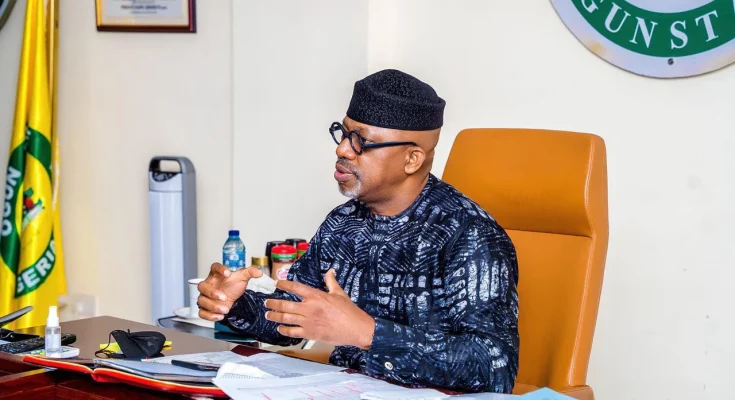

Ogun State governor, Dapo Abiodun, has said that the most damaging subsidy inherited by the current administration was not petrol subsidy but foreign exchange subsidy, describing the combination of both as the biggest distortion confronting Nigeria’s economy prior to 2023.
Abiodun spoke on the sidelines of the National Economic Council (NEC) Conference at the Presidential Villa in Abuja, where governors, ministers and senior economic managers reviewed reforms and the country’s path to a $1 trillion economy.
According to the Ogun State governor, while fuel subsidy attracted more public attention, the foreign exchange subsidy had a deeper and more corrosive impact on investor confidence and the stability of the naira.
“One of the most profound points made was that the biggest subsidy was actually forex, not fuel,” Abiodun said, recalling remarks by the Central Bank of Nigeria (CBN) governor during a panel session at the conference.
He explained that years of forex subsidy, alongside petrol subsidy, weakened confidence in the naira and encouraged speculative behaviour, with Nigerians and businesses preferring to hold foreign currency rather than the local unit.
“At a point, people had no confidence in holding the naira because of the speed of depreciation. People began to stockpile foreign exchange. That situation has now been reversed,” he said.
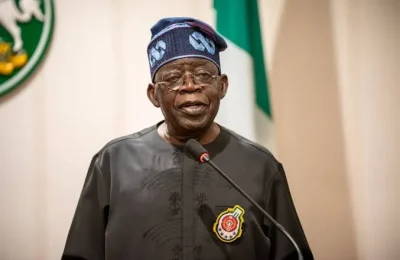
Abiodun noted that recent monetary and fiscal reforms introduced under the administration of President Bola Tinubu have helped stabilise the foreign exchange market and restore confidence.
“Today, there is stability in the forex market. There is confidence in the forex market, and there is confidence in holding the naira. That is where sustaining the economy begins,” he added.
The Ogun State governor said macroeconomic stability was the strongest enabler of investor confidence, arguing that infrastructure development alone could not attract investment without credible and predictable economic policies.
“You can build all the roads you want, but if investors are not confident that they can bring in their money and repatriate it at a determined exchange rate, they will not come,” Abiodun said.
He described the macroeconomic reforms implemented by the Tinubu administration as one of its biggest achievements so far, stressing that the next task was to build on those gains through security, infrastructure and power sector reforms.
Abiodun also commended the leadership of the NEC, chaired by Vice President Kashim Shettima, saying the conference had been insightful and productive for governors.
“This summit has been very insightful. Speakers were assembled across various sectors to highlight where we started in 2023, the gains we have made, and how we intend to achieve a $1 trillion economy,” he said.
He identified security as the next major enabler of investment after macroeconomic stability, noting that no amount of infrastructure could compensate for an atmosphere of insecurity.
“Insecurity will scare investors away. You can have good roads and policies, but if people don’t feel safe, they won’t come,” Abiodun said, adding that Nigeria had made “significant progress” compared to two or three years ago, despite lingering pockets of insecurity.
The governor also highlighted the economic importance of major federal infrastructure projects, including the Lagos–Calabar Coastal Highway and the Sokoto–Badagry road, describing them as game-changers for trade, mobility and regional integration.
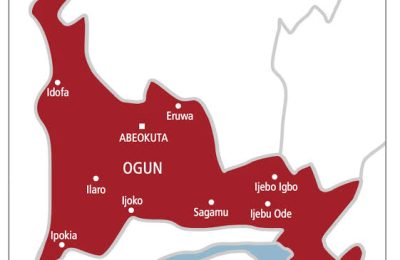
Speaking from Ogun State’s perspective, Abiodun said the coastal highway had transformed the viability of port development along the state’s coastline by drastically reducing travel time and improving evacuation of goods.
On power sector reforms, he praised President Tinubu for signing legislation that allows states to generate, transmit and distribute electricity, describing the move as “revolutionary”.
“Ogun State now regulates its electricity market. We are generating, transmitting and distributing power, and we are moving towards building a state grid. This will significantly boost investment and public-private partnerships,” he said.
Abiodun said stronger coordination between the federal and state governments was critical to sustaining economic reforms, noting that President Tinubu’s experience as a former governor had strengthened federal–state collaboration.
“Under his watch, governors have never had it so good. He understands that states are closest to the grassroots and that federal policies succeed only when states domesticate them,” he said.
He added that discussions on state policing and further devolution of powers were gaining momentum and would help address remaining security challenges, particularly at the community level.