● From a bold youth initiative to 300 Nigerians equipped for the future of mobility
By Akande Peter
Nigeria’s public policy landscape is filled with ideas that often begin with promise but struggle to survive beyond announcements, conferences and official statements. The more difficult task is transforming an idea into a programme, a programme into an institution and an institution into an opportunity that ordinary citizens can experience in their daily lives. The emerging story of Nigeria’s youth focused Compressed Natural Gas initiative provides a different trajectory. Since 2024, the conversation has gradually developed from introducing young Nigerians to opportunities in the CNG value chain to providing practical automotive training, building institutional partnerships and now placing 300 NYSC corps members on a structured path towards acquiring specialised skills in CNG vehicle retrofitting.
At the centre of the youth dimension of this development is Dr. Titilope Gbadamosi, Special Assistant to President Bola Ahmed Tinubu on Youth Initiatives, Monitoring and Delivery. Her role has been particularly relevant because the CNG conversation is not simply about changing the fuel used by vehicles. It is also about the people required to sustain the technology, service the vehicles, operate the emerging infrastructure and participate in the businesses that will develop around the transition. By placing youth development within this wider economic conversation, Gbadamosi has helped advance an approach in which young Nigerians are regarded not merely as beneficiaries of government intervention but as potential technicians, entrepreneurs, innovators and contributors to a changing Nigerian economy.
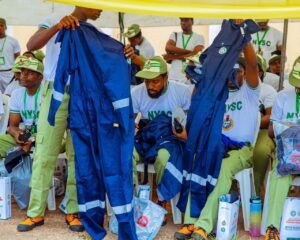
The commencement of training for 300 NYSC corps members across Abuja, Kano, Adamawa, Enugu, Edo and Lagos on August 11, 2026, represents the latest expression of that approach. It brings together the youth development mandate of the Presidency, the technical expertise of the National Automotive Design and Development Council, the national platform of the National Youth Service Corps and the broader clean mobility objectives of the Presidential Initiative on CNG and Electric Vehicles. It is therefore best understood as part of a developing policy journey rather than as an isolated event.
*A PRESIDENTIAL APPOINTMENT WITH A YOUTH DEVELOPMENT MANDATE*
President Bola Ahmed Tinubu’s decision to appoint Gbadamosi to a youth focused monitoring and delivery role placed her within one of the most important areas of the administration’s Renewed Hope Agenda. Nigeria has one of the largest and youngest populations in Africa, and the country’s economic future will depend substantially on its ability to convert that demographic strength into productive capacity. For an administration confronted with rising living costs, unemployment pressures and a rapidly changing labour market, youth empowerment cannot be limited to conventional political rhetoric. It requires deliberate investment in skills, enterprise and access to emerging economic opportunities.
Gbadamosi’s mandate is particularly relevant because monitoring and delivery place emphasis on what happens after policy is announced. The effectiveness of any youth programme is eventually determined by whether participants acquire something useful, whether institutions work together, whether private sector opportunities emerge and whether beneficiaries can translate training into sustainable livelihoods. Her involvement in the CNG youth agenda reflects this practical dimension of the mandate and demonstrates an effort to connect presidential policy direction with programmes that can be measured through participation, training, partnerships and potential employment outcomes.
Her background from Oyo State also gives this national assignment an interesting dimension. As an Oyo born public servant with visible engagement in youth development activities in Ibadan, her involvement in the automotive and skills agenda has connected national policy with a state that has historically played an important role in Nigeria’s commercial, educational and industrial development. The story of the CNG youth initiative would therefore be incomplete without recognising the significance of seeing an initiative with strong national implications develop through engagements that also reached young people in her home state.
*2024:THE BEGINNING OF A NEW CONVERSATION*
The youth dimension of Nigeria’s CNG transition became particularly visible in September 2024 when the Federal Government commenced a programme designed to expose young Nigerians to opportunities within the emerging CNG conversion value chain. The two day programme, titled “Harnessing Youth Potentials and Career Prospects in the Nigerian Automotive Sector with a Focus on the Compressed Natural Gas Conversion Value Chain,” was held at the Shehu Musa Yar’Adua Centre in Abuja on September 11 and 12, 2024.
The programme represented an important shift in how the CNG transition could be understood. CNG was already being discussed as an alternative to petrol and as part of the Federal Government’s response to the economic consequences of fuel subsidy removal. However, the youth focused intervention broadened the conversation by examining the employment and enterprise opportunities that could emerge from the transition. Young Nigerians were exposed to areas including vehicle conversion, cylinder installation, refuelling infrastructure, technical services and other components of the developing CNG value chain.
Gbadamosi and the National Automotive Design and Development Council, under the leadership of its Director General, Otunba Joseph Osanipin, were among the key actors associated with the youth focused approach. The intervention helped establish an important principle that would become more prominent in subsequent years: if Nigeria was going to develop a new automotive energy ecosystem, Nigerian youths needed to possess the technical skills required to participate in it.
The Federal Government’s wider CNG initiative was therefore beginning to intersect with youth development. Instead of seeing the energy transition exclusively through the lens of infrastructure and fuel affordability, the emerging approach recognised that a new industry requires a new generation of skilled workers. It was the beginning of a journey in which energy policy and youth employment would increasingly occupy the same policy space.
*THE NADDC PARTNERSHIP AND THE BUILDING OF TECHNICAL CAPACITY*
The involvement of NADDC has been central to the technical side of the initiative. Under Otunba Joseph Osanipin, the council has continued to play a significant role in Nigeria’s efforts to develop automotive technology, technical skills and local capacity. Its participation in the CNG youth programme provided the technical foundation necessary to move beyond general awareness towards structured learning.
The partnership between the Office of the Special Assistant to the President on Youth Initiatives and NADDC brought together complementary responsibilities. Gbadamosi’s office focused on ensuring that young Nigerians were connected to emerging opportunities, while NADDC brought technical expertise relating to automotive technology and skills development. Such collaboration is particularly important in an industry where poor technical knowledge can have serious consequences for vehicle safety and public confidence.
Osanipin’s role also illustrates why the success of the programme cannot be attributed to one individual alone. The development of CNG skills requires regulatory guidance, technical standards, appropriate training facilities, competent instructors and credible certification. The NADDC provides an essential institutional bridge between the youth empowerment objective and the technical requirements of the automotive sector.
*2025:IBADAN AND THE EXPANSION OF THE SKILLS AGENDA*
The journey took another important step in 2025 when attention turned increasingly towards practical automotive skills in Ibadan, Oyo State. Through collaborations involving the Office of the Special Assistant to the President on Youth Initiatives and NADDC, young Nigerians were exposed to automotive innovation, mechatronics, CNG related skills and other areas associated with the future of mobility.
The significance of Ibadan was not merely geographical. It demonstrated that Gbadamosi’s youth mandate could produce interventions with direct relevance to her home state while remaining connected to national priorities. The 2025 automotive youth conference and associated skills interventions brought together young people, government institutions and industry stakeholders around the question of how Nigerian youths could participate in an automotive sector undergoing technological transformation.
One hundred young technicians were subsequently trained through interventions involving NADDC and DAG Bajaj, including specialised training in CNG conversion and vehicle retrofitting. The programme produced tangible outcomes beyond the classroom, with six outstanding trainees receiving employment opportunities from Weeldrop Petroleum Company. Private sector actors, including Lanre Shittu Motors and Nord Motors, also provided financial support amounting to ₦11 million. These developments showed the value of linking training with industry participation, because skills become more valuable when beneficiaries can see a pathway from learning to employment, enterprise and professional growth.
The Ibadan experience reinforced an important feature of Gbadamosi’s approach: youth empowerment becomes more meaningful when it is connected to real economic sectors. Young Nigerians were not being trained simply to obtain another certificate. They were being introduced to technical areas in which employers, businesses and emerging industries could potentially require their services.
*2026:FROM PROGRAMMES TO INSTITUTIONAL POLICY*
By 2026, the CNG youth agenda had moved beyond individual training interventions towards a more institutional framework. In April, the Federal Government inaugurated a multi stakeholder Technical Committee to facilitate the integration of CNG retrofitting skills into the NYSC Skills Acquisition and Entrepreneurship Development programme. The committee brought together NADDC, NYSC, the Presidential Initiative on CNG and Electric Vehicles and the Federal Ministry of Youth Development.
The significance of this development lies in the scale of the NYSC platform. Every year, thousands of Nigerian graduates pass through the national service programme. Integrating specialised CNG skills into SAED therefore creates the possibility of reaching successive generations of young Nigerians rather than limiting the opportunity to participants selected for individual conferences or short-term programmes.
Gbadamosi chaired the committee, placing her directly within the process of designing a framework for curriculum development, training standards, certification and industry partnerships. This represented an important transition from advocacy to institutional planning. The challenge was no longer simply to demonstrate that CNG skills could benefit young Nigerians. It was to develop a structure through which those skills could become part of an established national youth development platform.
*MAY 2026:THE PARTNERSHIP BECOMES FORMAL*
The process advanced further in May 2026 when the relevant institutions formalised their partnership for CNG skills development within NYSC SAED. The agreement brought together the Office of the Special Assistant to the President on Youth Initiatives, NADDC, NYSC, the Federal Ministry of Youth Development and the Presidential Initiative on CNG and Electric Vehicles.
The Director General of NYSC, Brigadier General Olakunle Nafiu, played an important institutional role in the partnership by providing the platform through which the initiative could reach corps members nationwide. The involvement of NYSC gives the programme a reach that individual youth initiatives cannot easily achieve. The scheme already possesses an established structure for skills acquisition and entrepreneurship development, making it a natural vehicle for expanding technical opportunities among corps members.
The partnership also demonstrates the value of institutional collaboration in addressing Nigeria’s skills gap. NADDC provides automotive expertise, NYSC provides national reach, the Ministry provides policy support, the Presidential CNG and EV initiative connects the programme to the country’s broader energy transition, while the Office of the Special Assistant to the President on Youth Initiatives provides coordination around youth participation and delivery.
*AUGUST 11, 2026:300 CORPS MEMBERS BEGIN THE JOURNEY*
Today, August 11, 2026, the policy journey has reached another practical stage as 300 NYSC corps members commence specialised training in CNG vehicle retrofitting across Abuja, Kano, Adamawa, Enugu, Edo and Lagos. Participants with relevant backgrounds in Mechanical Engineering, Automotive Engineering and Electrical Engineering are being positioned to acquire practical competencies that complement their academic qualifications.
For the beneficiaries, the training offers something that conventional academic education does not always provide: a specialised technical skill that can potentially be applied directly within the labour market. CNG vehicle conversion requires knowledge of vehicle systems, installation procedures, maintenance and safety, meaning that successful participants can potentially develop careers within conversion centres, automotive workshops, maintenance companies and related businesses.
The wider significance is equally important. Nigeria cannot build a sustainable CNG ecosystem without people who understand the technology. Infrastructure can be imported, equipment can be purchased and policies can be written, but a functioning industry ultimately depends on competent Nigerians who can install, maintain, repair and improve the systems upon which the industry depends.
The 300 corps members are therefore beneficiaries of an initiative that has taken several years to develop. Their training is the visible outcome of earlier policy conversations, partnerships, technical committee deliberations and institutional agreements. It represents the point at which policy begins to take physical form in the lives of young Nigerians.
*BEYOND THE 300 BENEFICIARIES*
Although the immediate beneficiaries’ number 300, the potential reach of the programme is much larger. If the training framework is properly sustained, future cohorts of corps members could benefit from similar opportunities. Trained participants may eventually establish businesses, join existing conversion centres, train other technicians or move into related areas of automotive technology.
There are also potential benefits for vehicle owners and transport operators. As the number of properly trained technicians increases, the availability of competent technical services can improve. Employers within the automotive and energy sectors may gain access to a larger pool of skilled personnel, while entrepreneurs may identify opportunities around conversion services, maintenance, equipment supply and other components of the value chain.
The initiative can also contribute to local capacity development. A country that relies excessively on foreign technical expertise for emerging technologies may struggle to retain value within its own economy. Developing Nigerian technicians and entrepreneurs creates an opportunity for more of that value to remain within the country, while simultaneously giving young people a practical route into a sector with growing national relevance.
*TITI GBADAMOSI’S PLACE IN THE STORY*
The strongest argument for recognising Gbadamosi’s contribution lies in the continuity of her involvement. Her role should not be presented as though she single handedly created Nigeria’s CNG policy, because the initiative involves numerous institutions, technical experts, private sector organisations and government officials. The more accurate description is that she has been an important champion of the youth dimension of the transition and a coordinator within the process of connecting youth development with the emerging CNG economy.
Her contribution is particularly visible in the progression from awareness to structured intervention. In 2024, young Nigerians were introduced to the opportunities within the CNG value chain. In 2025, training and industry engagement expanded, including practical automotive interventions in Ibadan. In 2026, the initiative moved into institutional planning through the NYSC SAED framework, followed by formal inter agency collaboration and the commencement of training for 300 corps members.
That progression gives meaning to the principle behind her monitoring and delivery mandate. It demonstrates an understanding that government programmes should not be judged solely by the number of speeches delivered or meetings convened, but by what changes for the people the programmes are designed to serve.
A RECOGNITION OF LEADERSHIP AND PARTNERSHIP
The story also deserves to be situated within the wider leadership of President Bola Ahmed Tinubu and the Renewed Hope Agenda. The President’s decision to appoint Gbadamosi to a youth focused role reflects the administration’s recognition that young Nigerians must occupy a central position in the country’s economic transformation. Her work on the CNG youth agenda provides one example of how that presidential mandate can be translated into practical skills development.
The contributions of Otunba Joseph Osanipin at NADDC and Brigadier General Olakunle Nafiu at NYSC have equally been important to the progression of the programme. Without NADDC’s technical expertise, the training would lack the necessary automotive foundation. Without NYSC’s national structure, the programme would lack the reach required for eventual expansion. The Federal Ministry of Youth Development and the Presidential Initiative on CNG and Electric Vehicles further strengthen the institutional framework.
It is this combination of leadership that gives the initiative its greatest promise. As the Yoruba proverb teaches, “A kì í fi ọwọ́ kan gbé ẹrù” — one hand cannot lift a heavy load. Nigeria’s energy transition is too complex for one institution to manage alone, and youth empowerment is too important to be treated as the responsibility of one agency. The emerging partnership demonstrates what can happen when government institutions align their respective strengths around a common objective.
CNG AS A BRIDGE TO THE FUTURE
The future of mobility in Nigeria will not necessarily be defined by CNG alone. The country is already looking towards a broader transition involving electric vehicles, alternative fuels, advanced automotive technologies and more efficient transportation systems. CNG can therefore be understood as one component of a larger transformation in the way Nigerians produce, fuel, maintain and use vehicles.
For the young Nigerians entering the programme today, this broader context matters. Their training may begin with CNG retrofitting, but the technical knowledge they develop can provide a foundation for further learning in automotive diagnostics, alternative propulsion systems, electric mobility and other emerging technologies. In a rapidly changing labour market, the ability to learn, adapt and acquire new competencies may ultimately prove as valuable as the first technical skill itself.
This makes youth skills development an investment in Nigeria’s future productive capacity. A degree may open a door, but practical competence can determine what happens after the door is opened. By combining academic backgrounds with specialised technical training, the programme gives participants another instrument with which to navigate the labour market.
*THE ROAD AHEAD*
The story of Nigeria’s CNG youth agenda is still being written. Its early chapters began with youth focused discussions in 2024, developed through practical training and industry engagement in 2025, acquired an institutional framework in 2026 and have now reached 300 corps members beginning specialised training. The next chapters will depend on the quality of implementation, the sustainability of the partnerships and the opportunities available to beneficiaries after training.
For Gbadamosi, the most meaningful recognition will ultimately come not from praise but from results. If the 300 corps members leave the programme with credible skills, obtain employment, establish businesses, train others and contribute to Nigeria’s growing automotive ecosystem, the initiative will have achieved a purpose far greater than the launch ceremony itself.
The journey also demonstrates the value of investing in young people during periods of economic and technological transition. Nigeria is entering an era in which technical competence, innovation and adaptability will increasingly determine who benefits from emerging industries. Ensuring that Nigerian youths possess those competencies is not merely a youth development strategy; it is an economic necessity.
From the CNG youth engagement of 2024, through the automotive interventions in Oyo State in 2025, the institutional work of 2026 and the commencement of training for 300 NYSC corps members today, the trajectory presents a developing model of youth centred policy implementation. The journey has connected the Presidency, NADDC, NYSC, the Ministry of Youth Development, the Presidential CNG and EV initiative, private sector actors and young Nigerians around an emerging economic opportunity.
For Dr. Titilope Gbadamosi, the significance of the moment lies in the opportunity to see an idea that once existed largely within policy discussions taking practical shape in the lives of young Nigerians. As a daughter of Oyo State who has carried a youth focused national mandate into a programme of growing significance, her role deserves recognition for helping to keep young Nigerians at the centre of a transformation that could reshape Nigeria’s automotive landscape.
President Tinubu gave her the mandate; institutions such as NADDC and NYSC have provided the machinery; technical experts and private sector actors have supplied critical support; and the young beneficiaries are now being given the opportunity to make the investment count. The road ahead remains long, but every journey of national transformation begins with people equipped to take the next step.
Today, 300 corps members have taken theirs. The larger task is to ensure that the skills they acquire become the foundation for employment, enterprise and a stronger Nigerian automotive industry. If that happens, the achievement will extend far beyond the 300 trainees and become part of a much broader story about how Nigeria can turn technological change into an opportunity for its young people.